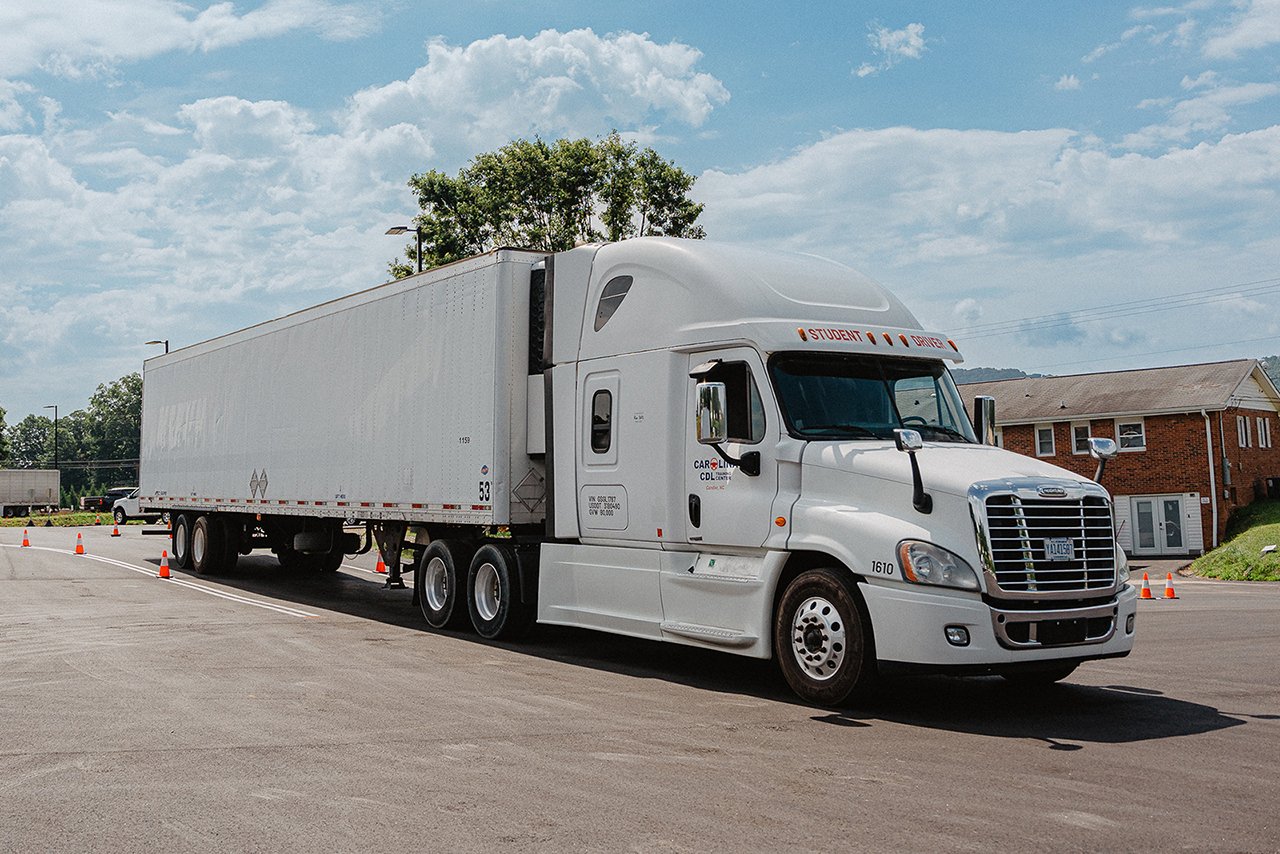
It's a fair question, and the answer shouldn't be a mystery. The cost of getting your CDL comes down to two things: tuition for the training itself, and a handful of student fees that go to third parties like the DMV and the medical examiner. We'll lay out both so you know exactly what to budget - and then show you how financing makes it manageable.
Tuition at Carolina CDL Training Center
Our tuition is flat, cash pricing with no hidden add-ons. What you pay depends on which class of license you're after and whether you train on an automatic or manual transmission:
| Program | Automático | Manual |
|---|---|---|
| CDL Clase A (160 hrs) | $4,000 | $4,500 |
| CDL Clase B (160 hrs) | $3,500 | $4,000 |
| Refuerzo de CDL | $2,500 | |
Both the Class A and Class B programs are 160 hours over roughly four weeks. If you already have experience and just need to knock the rust off before a road test, the Refuerzo de CDL is the budget option at $2,500. And if you trained elsewhere and only need testing, we offer third-party skills testing: $250 if you bring your own equipment, or $500 to use ours - for both Class A and Class B. Not sure which class fits you? Compare Class A vs Class B.
Student fees (these aren't tuition)
This is where a lot of schools stay quiet, so we'll be straight with you. Beyond tuition, every new CDL driver runs into a few standard costs. They're not paid to the school as profit - they're real expenses you'd have anywhere:
- DOT medical certificate - about $100. Every commercial driver needs a physical from a certified medical examiner.
- Registration fee - $150. A one-time fee to enroll and reserve your spot.
- Housing - from $125 per week. Only if you're coming from out of the area and need a place to stay during training. Locals skip this entirely.
- DMV fees - vary by state. Your permit, license, and test fees are set by the NCDMV (or your home-state DMV).
One thing that saves NC residents money and time: you don't need a CDL permit to start training with us. You can begin classroom and range hours right away and handle the permit during the program, instead of paying for it up front and hoping you pass before you've trained.
What's a realistic all-in budget?
For a local NC resident pursuing a Class A automatic, a realistic all-in estimate looks like tuition ($4,000) plus registration ($150), the DOT medical (~$100), and your DMV fees - so roughly $4,250 plus state DMV costs, with no housing needed. Manual transmission or out-of-area housing will push it higher. Your exact number depends on your situation, and we're happy to spell it out for you before you commit - just ask.
How financing works - CREDEE
Here's the reality: a few thousand dollars up front is a hurdle for a lot of people who'd make great drivers. That's exactly why we partner with CREDEE for financing. It's built to remove that hurdle:
- No credit check. Your past credit doesn't lock you out.
- Instant approval for about 95% of students. You find out fast, not in two weeks.
- Payment plans up to 6 months. Spread the cost so you can start training now instead of saving up for months.
- Builds your credit. On-time payments are reported to the credit bureaus, so financing your training can actually improve your score.
The math that matters: a Class A driver can be licensed and earning within about four weeks. Financing lets you start that clock now rather than later - which usually means the training pays for itself quickly once you're on the road. See full details on tuition assistance, or explore all funding options.
Why our pricing is structured this way
You'll notice automatic transmissions cost a little less than manual. That's deliberate, and it reflects how the industry has shifted - a large share of modern trucks are automatic, so training on one gets you job-ready efficiently. If you specifically want to be able to drive a manual (a "stick"), that option is there, and it keeps you eligible for the handful of carriers that still run them. Either way, you're getting the same full 160-hour program; the difference is the equipment you train and test on. Our Class A vs Class B comparison covers how the license choice affects your jobs and pay.
Watch out for hidden costs at other schools
When you're comparing CDL schools on price, make sure you're comparing the same thing. A low headline tuition number sometimes hides extra charges that get added later - mandatory "equipment fees," testing surcharges, retake fees, or required materials. Always ask a school three questions: What's the total tuition? What student fees are on top of it? And what happens, cost-wise, if I need to retake a test? We'd rather tell you the real, all-in picture up front than win you with a number that grows after you've signed.
Is CDL training worth the cost?
Compared to a two- or four-year degree, CDL training is fast and affordable - weeks instead of years, thousands instead of tens of thousands, and no piling up student debt before you can work. You finish with a license that's in real demand and a clear path to a paycheck. Think of it less as an expense and more as a short, focused investment that you can start earning back within weeks of finishing. For most people, it's one of the quickest routes to a stable, well-paying career that exists.
Want a personalized cost estimate or to talk through financing? Contáctanos or call us at (888) 878-9986 - we'll give you real numbers, no pressure.