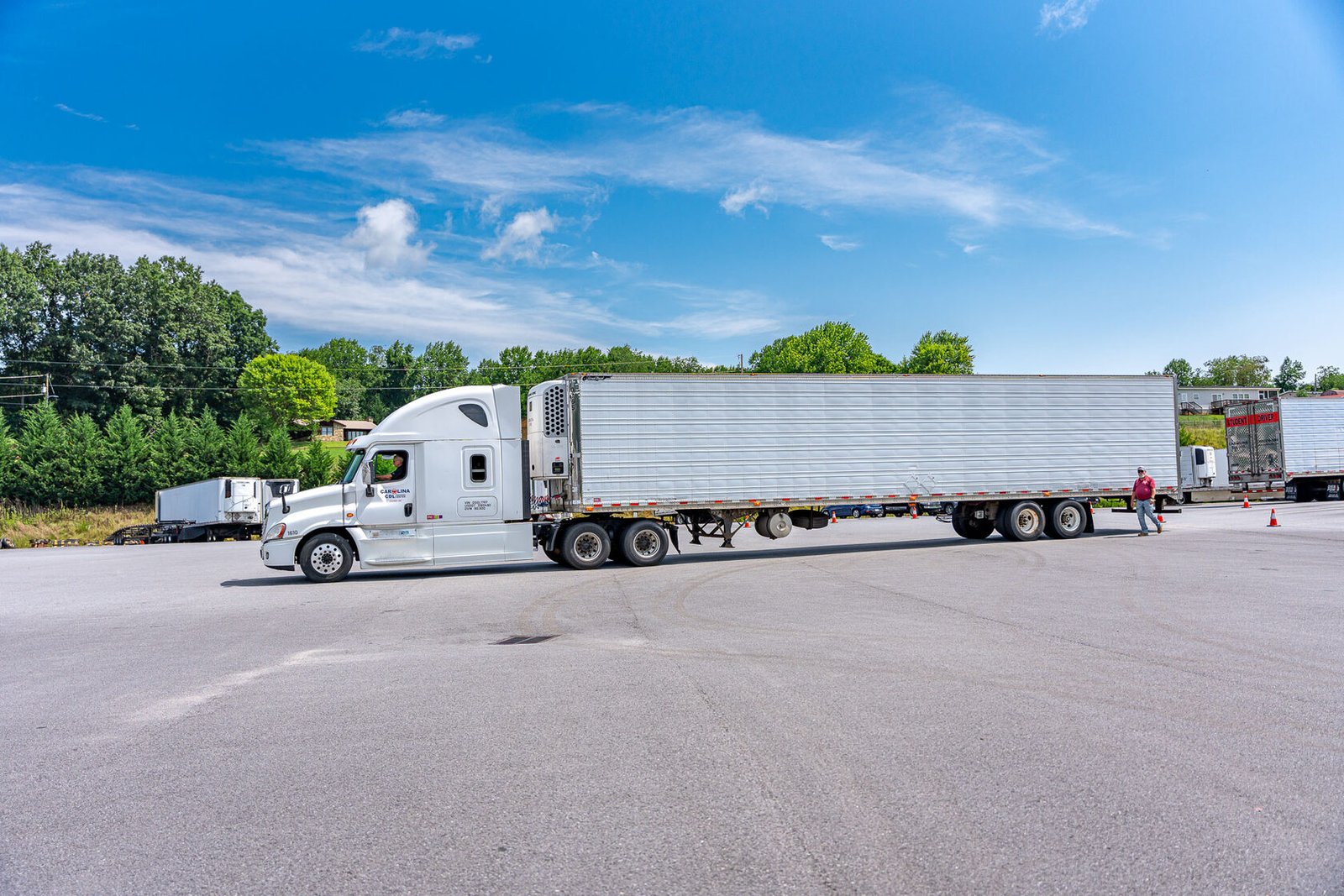
Getting your commercial driver's license in North Carolina isn't complicated - but there are a handful of steps you have to take in the right order. This guide walks you through all of them, from the federal training rule to the day you pass your road test. At Carolina CDL Training Center in Candler, just outside Asheville, we take students through every one of these steps and put them on the road in about four weeks.
Step 1: Make sure you meet the basic requirements
Before anything else, confirm you're eligible. To drive commercially in North Carolina you generally need to be at least 18 years old to drive within the state and 21 to drive across state lines or haul certain freight. You'll need a valid regular driver's license, be able to read and speak English well enough to handle road signs and reports, and pass a Department of Transportation (DOT) physical. If that all sounds like you, you're ready to start.
Step 2: Understand the ELDT requirement
Since February 7, 2022, anyone earning a CDL for the first time - or upgrading from Class B to Class A, or adding a hazmat, passenger, or school bus endorsement - has to complete Entry-Level Driver Training (ELDT). This is a federal standard set by the FMCSA. It means you can't just walk into the DMV and take the test cold anymore; you have to train with a provider listed on the federal Training Provider Registry first.
The good news: our program is fully ELDT-compliant. When you train with us, your completion is reported to the registry automatically, so you're cleared to take your skills test. Read our full breakdown of ELDT here if you want the details.
Step 3: The CLP (commercial learner's permit)
A commercial learner's permit (CLP) lets you practice driving a commercial vehicle on public roads with a qualified CDL holder beside you. To get one you pass the written knowledge tests at the NCDMV.
Here's something a lot of people don't realize: North Carolina residents do not need a CDL permit to start training with us. You can begin your classroom and range hours first, and we'll help you prepare for and pass the permit tests during the program. That removes the biggest hurdle people get stuck on and gets you moving faster.
Step 4: Choose Class A or Class B
This is one of the most important decisions you'll make, because it determines what you can drive and what jobs you can take.
- Class A covers combination vehicles with a gross combination weight rating of 26,001 lbs or more where the towed unit is over 10,000 lbs - tractor-trailers, tankers, and flatbeds. It opens the widest range of jobs and the highest pay. See our Class A program.
- Class B covers single heavy vehicles over 26,000 lbs GVWR - dump trucks, box trucks, buses, and straight trucks. It's a great fit for local and regional work that gets you home every night. See our Class B program.
If you're not sure which is right for you, a Class A license actually covers most of what a Class B can do, which is why it's the most popular choice for new drivers who want options.
Step 5: Pick the right school
Not all CDL training is equal. When you're comparing schools, look for a program that:
- Is ELDT-compliant and listed on the federal Training Provider Registry - this is non-negotiable.
- Trains you on real trucks and a real cone range, not a simulator.
- Offers on-site skills testing so you don't have to chase down a third-party examiner.
- Has experienced instructors and a clear, structured schedule.
- Helps with financing and job placement so the cost and the "what's next" are both handled.
Our 160-hour course checks every one of those boxes - 50 hours classroom, 50 hours on the range, 20 hours of highway driving, and 40 hours of observation, run Monday through Thursday, 8:00am to 6:30pm.
Step 6: Pass the written knowledge tests
To get your permit, you'll take a series of written tests at the NCDMV. For most new drivers that means:
- General Knowledge - required for all CDL applicants.
- Combination Vehicles - required for Class A.
- Air Brakes - required if you'll drive a vehicle equipped with air brakes (most CDL vehicles).
Our classroom hours are built to prepare you for exactly these tests, so you walk into the DMV ready instead of guessing.
Step 7: Pass the skills (road) test
The skills test has three parts: a pre-trip inspection where you show you can check the truck for safety, a set of basic control / backing maneuvers on the range, and the road test out on real streets. We drill all three throughout the program, and because we offer on-site testing, you can take your skills test right where you trained - on equipment you already know.
Step 8: Get your DOT medical certificate
Every commercial driver needs a valid DOT medical certificate, which you get from a certified medical examiner. It confirms you're physically fit to drive. Budget around $100 for the exam - it's a student fee, not part of tuition.
What it costs - and how to pay for it
Tuition at Carolina CDL Training Center is straightforward, cash pricing:
- Class A: $4,000 automatic / $4,500 manual
- Class B: $3,500 automatic / $4,000 manual
- CDL Refresher: $2,500
On top of tuition, plan for a few student fees - around $100 for the DOT medical certificate, a $150 registration fee, housing from $125/week if you need it, and state DMV fees. If paying all at once isn't realistic, we partner with CREDEE for financing: no credit check, instant approval for most students, and plans up to six months. On-time payments even get reported to the credit bureaus, so financing your training can help build your credit. Learn more about tuition assistance or explore all funding options.
Step 9: Start driving
Once you've got your CDL in hand, the last step is the best one - getting hired. We connect graduates with real trucking jobs through our placement partner, so you're not job-hunting alone. From your first call to a license and a job offer, the whole thing can take about four weeks.
Ready to get started? Apply today and our team will reach out to schedule your start date, or call us at (888) 878-9986 with any questions.